


 Primary Care

Broken Bones & Fractures: Symptoms, Types, and Treatment Options
What are Broken Bones and Fractures?
Broken bones and fractures are most often caused by acute injuries such as falls, blunt trauma, or unnatural bending of an arm or leg. While the terms are often used interchangeably, fractures can vary in severity and type. Most fractures fall into one of the following four categories:
Stable Fractures
Stable fractures are the simplest and most common type. In these cases, the bone is broken but remains properly aligned. On an X-ray, stable fractures often appear as thin lines with no separation between bone pieces. When treated appropriately, they typically heal faster than more severe fractures.
Hairline or Stress Fractures
Hairline fractures—sometimes called partial fractures—do not result in complete separation of the bone. Hairline fractures can occur from a single injury or from repetitive stress over time. These fractures can be difficult to detect initially but usually have an excellent prognosis when properly treated.
Compound (Open) Fractures
Compound fractures are more serious and occur when the broken bone pierces the skin. Prompt professional treatment is critical to prevent infection and other complications. Without proper care, compound fractures can become severe.
Comminuted Fractures
Comminuted fractures are the most serious type and occur when a bone breaks into three or more pieces. These injuries may require surgical intervention, including metal screws or pins, and often involve a longer recovery period with physical therapy or rehabilitation.
Any suspected fracture or broken bone should be evaluated by a medical professional as soon as possible.
Symptoms of Broken Bones and Fractures
Broken bones and fractures typically present with recognizable symptoms, including:
- Pain, especially when pressure is applied or movement occurs
- Redness
- Swelling
- Bruising
- Bleeding
- Dizziness
Diagnosing and Treating Broken Bones and Fractures
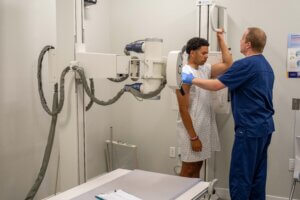
Diagnosis begins with a physical examination and a detailed discussion of how the injury occurred. While clinical evaluation can provide strong clues, X-rays are often used to confirm the presence and type of fracture.
Treatment depends on the severity of the injury. Many fractures—particularly stable and hairline fractures—can be treated with a splint, cast, or brace to support healing and manage pain. More serious fractures may require surgical repair with pins, plates, or screws, followed by a longer recovery period and rehabilitation.
When to go to the Emergency Room:
- The bone is poking through the skin.
- The limb looks severely deformed or “crooked.”
- You have numbness, tingling, or a “cold” feeling in the limb.
- The injury is to the head, spine, or hip.
Diagnosing and Treating Broken Bones and Fractures
Diagnosis begins with a physical examination and a detailed discussion of how the injury occurred. While clinical evaluation can provide strong clues, X-rays are often used to confirm the presence and type of fracture.
Treatment depends on the severity of the injury. Many fractures—particularly stable and hairline fractures—can be treated with a splint, cast, or brace to support healing and manage pain. More serious fractures may require surgical repair with pins, plates, or screws, followed by a longer recovery period and rehabilitation.
We’re Here to Help
Broken bones and fractures are a fact of life, but prompt treatment can make a significant difference in recovery and help prevent complications. At ConvenientMD, we diagnose and treat minor fractures, helping patients heal safely and get back to their daily routines as quickly as possible.