


 Primary Care

Sprains and Strains: Symptoms, Treatment, and Care
What are Sprains and Strains?
Sprains and strains are common injuries amongst both children and adults. While similar to one another, each actually involves a different part of the body. Sprains occur when tough, fibrous ligament tissue in the joints is overstretched or torn, commonly affecting the ankles, knees, and wrists. Strains involve stretching or tearing of muscles or tendons, often occurring in the lower back, hamstrings, and shoulder muscles.
Both types of injuries can range in severity from mild (small tears or overstretching) to severe, in which case a complete tear may result. Sprains and strains require medical attention to ensure minimal healing time.
How Do Sprains and Strains Occur?
Any type of physical activity can lead to sprains or strains, although certain scenarios are more common than others.
Sprains affect ligaments (the tough bands that connect bone to bone at a joint). They occur when a ligament is stretched or torn, often from twisting, rolling, or sudden impact.
Strains affect muscles or tendons (which connect muscle to bone). They commonly result from overstretching, improper lifting, sudden movements, or repetitive stress. A strain may lead to muscle spasms, swelling, cramping, and difficulty moving the affected area, which is typically confined to the legs, arms, neck and back.
How are Sprains and Strains Treated?
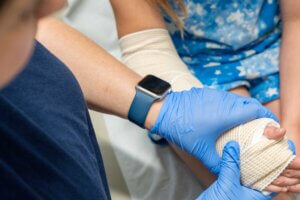
Treatment begins with controlling swelling and pain through rest, ice (15–20 minutes at a time), compression, and elevation. NSAIDs may help reduce pain and inflammation. Moderate-to-severe sprains or strains may require splints or braces, and complete tears of ligaments or tendons could need surgical repair. Physical therapy is often recommended to regain strength and mobility.
Pediatric Considerations
Sprains and strains in children and adolescents can have unique considerations. During growth spurts, bones, muscles, and tendons may develop at different rates, increasing the risk of injury. Young athletes are particularly susceptible to sprains, strains, and overuse injuries. Additionally, injuries near growth plates—the areas of developing tissue at the ends of long bones—require careful evaluation, as damage can affect future bone growth. Parents and caregivers should seek prompt medical attention if a child experiences severe pain, swelling, difficulty moving the joint, or any signs of a more serious injury.
We’re Here to Help
At ConvenientMD, we understand how painful sprains and strains can be. Our providers evaluate injuries and provide appropriate treatment during your visit. From mild strains to more severe sprains, walk in without an appointment for prompt medical care. We’re open every day from 8 a.m. to 8 p.m.