Primary Care

What is Strep Throat?
Strep throat occurs as a result of an infection in the tonsils and throat by a bacteria known as Streptococcus pyogenes—also called “Group A Streptococcus.” The bacteria, which lives in the nose and throat, is easily spread from one person to another via close contact or cross-contamination of doorknobs, telephones and other objects.
Highly contagious, strep throat tends to affect children aged 5-15 more than other populations, though people of any age (including adults) can get sick from being exposed to strep bacteria.
What are the symptoms of Strep Throat?
For many people, the symptoms of strep throat come on suddenly and often out of the blue. While everyone experiences strep throat differently, common symptoms include:
- Swollen, red tonsils
- Fever of 101 F or higher
- Extremely sore throat (often with fast onset)
- Painful swallowing
- Headache
- White patches on the tonsils
- Swollen glands on the neck
- Nausea / Vomiting
- Loss of Appetite
In rare occurrences, a rash may be experienced as a symptom of strep throat—a sign that one should seek medical attention.
What are the complications of Strep Throat?
Untreated strep can get better on it’s own, but not treating it greatly increases the risk of serious complications including ear infections, sinusitis and abscess of the tonsils. Most notably is the risk of developing rheumatic fever or inflammation of the kidneys—both of which can cause serious, lasting health problems.
- Rheumatic Fever — Occurs when strep bacteria travels through the bloodstream and attaches to one of the heart valves.
- Abscess — Spread of infection to the tonsils in the form of a mass called a “peritonsillar abscess” which must be treated immediately with a drainage procedure performed in a medical setting, antibiotics and at times, IV antibiotic therapy.
- Glomerulonephritis — Glomerulonephritis is inflammation of the kidneys and can occur when the immune system creates antibodies to attack strep bacteria.
Fortunately, these and other complications can be avoided with antibiotic treatment (the most common approach to treating strep throat). Symptoms should begin to fade within 48 hours of starting a course of antibiotics, and most people feel better within a week.
Is it Strep or just a sore throat?
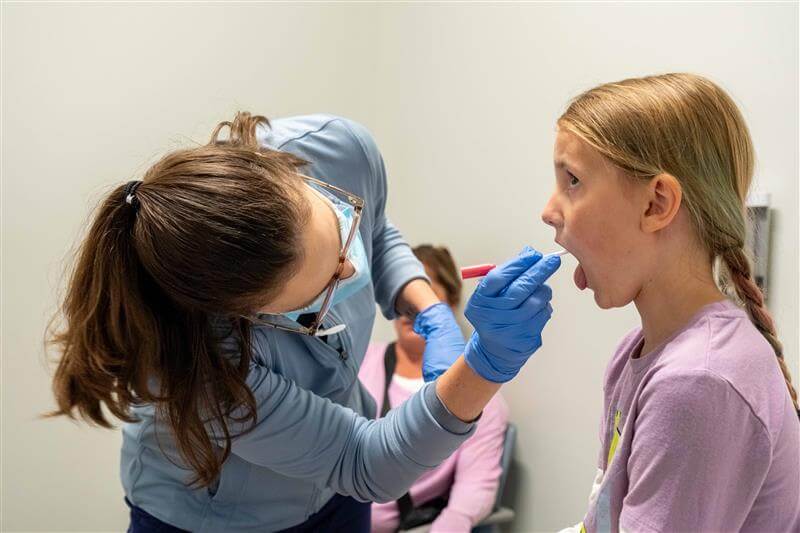
Sore throats are common throughout the winter months and can come from a number of different sources, including viruses, exposure to certain chemicals and even overly dry air. Though they may make people feel like they have strep throat, these types of sore throats generally get better with time and are not caused by bacterial infection. The only way to know for sure whether or not a sore throat is through a rapid strep swab or throat culture, which confirms the presence of strep.
Pediatric Considerations
Keep in mind that fever associated with strep throat in children should never be treated with aspirin, as doing so may result in Reye’s syndrome—a rare disorder that causes brain and liver damage.
We’re Here to Help
At ConvenientMD, we know how miserable strep throat can make you feel and how quickly it can disrupt your day. Our providers can evaluate your symptoms, perform strep testing, and determine appropriate care during your visit.
Whether you’re dealing with a sore throat or need testing for possible strep, you can walk in without an appointment for prompt medical attention. We’re open every day from 8 a.m. to 8 p.m.